Stamping Dies 101: Separation vs. Forming and the Three Key Operations
September 19, 2026
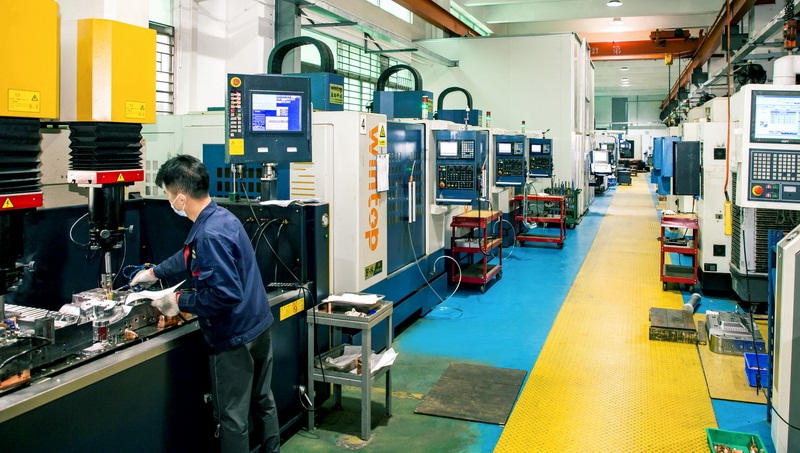
In stamping die work, every job boils down to two categories: separation and forming. Separation covers piercing, blanking, and trimming—operations where the sheet metal is cut along a closed contour. Forming covers bending, drawing, flanging, and bulging, where the material undergoes plastic deformation instead of being cut. For those of us quoting and building dies, knowing which category a part falls into determines the die structure, tonnage requirements, and the process sequence we propose to the customer. A blanking die and a drawing die may share a press, but their engineering logic is completely different.
Clearance is the make-or-break variable in separation work. As a rule, we set punch-die clearance at 5% to 10% of sheet thickness per side—softer materials like aluminum or mild steel take the smaller value, harder materials like stainless or high-strength steel take the larger one. Get this wrong and you pay for it in burr height, slivers, and secondary operations. On the forming side, the enemies are springback and wrinkling. Bending always needs overbend or a compensation rib built into the die. Drawing is worse: if blank holder force is insufficient, the sidewall wrinkles; if it is excessive, the material tears at the die radius. For a typical deep-drawn cup, we often run 20% to 30% of the drawing force as blank holder force and adjust from there based on tryout results.
None of this is theoretical when you are quoting a job. Clearance, springback allowance, and blank holder force all feed directly into die complexity, tryout time, and ultimately price. A part that looks simple on a drawing can hide three forming stations and a trimming die if the geometry fights back. That is why experienced estimators walk the part through each operation before touching a number. For more mold sourcing and die quoting references, visit MoldWorld at www.moldw.com.