Die Casting Quotation: Master the Process Before You Quote
September 11, 2026
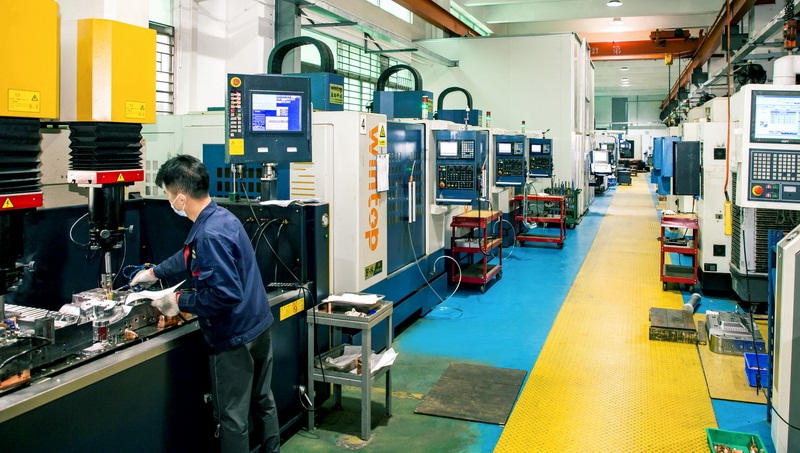
When a customer sends a die casting RFQ, the first thing I check is not the part weight but the process window. The three pillars—die casting machine, mold, and alloy—must match before any number makes sense. For example, a 1,200-ton cold chamber machine can handle a projected area that fits its tonnage curve, but if the mold is designed with an unbalanced runner or insufficient venting, you will fight porosity and scrap all day. Alloy choice matters too: ADC12 (A383) flows well for thin walls, while A360 offers better corrosion resistance but higher melting point, which affects die soldering and cycle time. On top of that, mold material and heat treatment decide tool life. A H13 die with proper nitriding might run 100,000 shots, but skip the stress relief and you will see heat checking at 30,000. These are not abstract details—they directly drive cost per shot.
From a quoting standpoint, I break down the cost into machine hour rate, mold amortization, alloy price, and yield loss. Suppose a part weighs 0.8 kg with a 1.5 kg shot weight (including overflow and biscuit). If ADC12 costs $2.80/kg, the metal cost alone is $4.20 per shot. Add a 5% scrap rate and that jumps to $4.41. Machine time at 60 shots per hour on a 800-ton machine with a $45/hour rate adds $0.75 per part. Then mold cost: a 4-cavity die at $18,000 running 200,000 shots means $0.09 per part. Finishing, machining, and inspection can easily double the base. Without a process layout—gate size, ejection, cooling line placement—you cannot estimate cycle time, and without cycle time your quote is fiction. I have seen quotes fail because someone ignored a 2-second difference in solidification time, which killed the margin.
So before you send a price, walk the floor or at least review the mold flow simulation. Check draft angles, wall thickness transitions, and whether the alloy’s shrinkage rate (typically 0.4–0.7% for aluminum) matches the mold cavity dimensions. A good quote reflects real cycle time, real tool life, and real scrap. For more mold sourcing and technical insights, visit MoldWorld at www.moldw.com.