← Back to Articles
Stamping: The Engineering Discipline Behind Every Metal Form
September 04, 2026
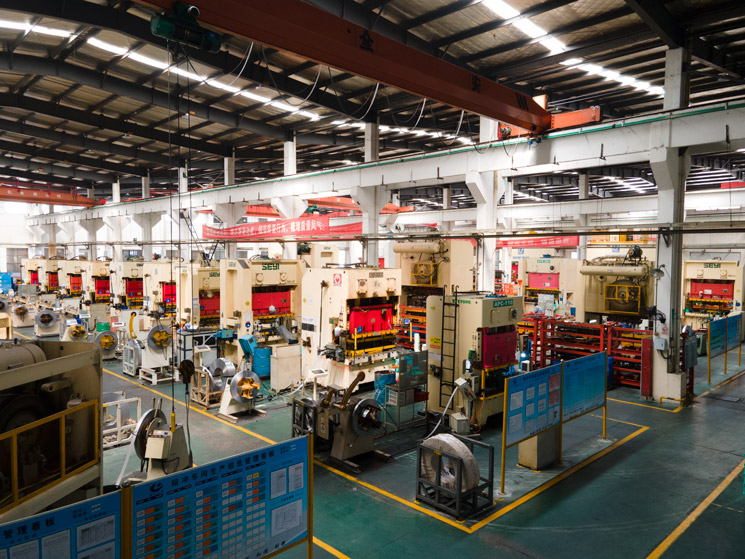
Stamping is often misunderstood as a simple “press and shape” operation, but in practice, it is a tightly controlled metal-forming process where sheet metal is forced to deform within a die under precise conditions. The three pillars—press force, die cavity geometry, and material ductility—must work in perfect harmony. From complex automotive body panels to appliance housings and even smartphone metal frames, nearly every mass-produced metal component traces back to a stamping line. However, experienced mold engineers know that success lies in the details: springback compensation, die clearance tuning, and lubrication control. Overlook any one of these, and the output is scrap.
For automotive outer panels, the challenge is dimensional stability. High-strength steels, with yield strengths often exceeding 590 MPa, exhibit significant elastic recovery after forming. To counter this, die makers incorporate over-bend angles and add draw beads to control material flow. Die clearance, typically set at 5–10% of material thickness per side for mild steel, must be adjusted for coated or high-strength materials to prevent edge cracking and burr formation. Lubrication is equally critical—applying the right viscosity oil at the correct spray rate reduces friction-induced galling and extends die life, especially in deep-drawing operations where the punch-to-die gap can be as tight as 0.05 mm.
In high-volume production, even a 0.02 mm deviation in die wear can cause part rejection. That is why regular maintenance schedules, including optical scanning of die surfaces and real-time tonnage monitoring on the press, are non-negotiable. For shops looking to improve first-pass yield, starting with a robust simulation (e.g., AutoForm or PAM-STAMP) to predict springback and thinning is a wise investment. But no software replaces hands-on trial-and-error—every tool steel grade, from D2 to H13, behaves differently under cyclic loading. If you are sourcing new dies or troubleshooting an existing line, consulting with experienced toolmakers and checking trusted industry resources can save weeks of downtime. For more mold sourcing and technical guidance, visit MoldWorld (www.moldw.com).