**Title:** Integrated Die-Casting Goes Mainstream: The Process Logic Behind Lexus Localization
September 02, 2026
Integrated die-casting (IDC) is no longer a headline-grabbing gimmick—it’s a production reality that Lexus’s recent localization push makes clear. For mold engineers, the shift from conventional stamped-and-welded body structures to single-piece aluminum castings changes the entire tooling calculus. Instead of managing dozens of stamping dies and spot-weld fixtures, we now design one large die set that can produce a complete rear floor or front shock tower assembly in a single shot. On the Lexus line, this translates into roughly 20% fewer body components and a cycle time drop from several minutes per subassembly to under 90 seconds per casting. The die itself must handle high-pressure aluminum injection at 700–800 bar, which demands H13 tool steel with advanced surface treatments like nitriding or PVD coating to resist thermal fatigue and soldering. Cooling channel design becomes critical—conformal cooling, often via 3D-printed inserts, cuts solidification time by up to 25% and improves dimensional consistency across the casting.
What matters on the shop floor is not just the press tonnage—typically 6,000 to 9,000 tons for these parts—but the entire thermal and vacuum management system. Lexus’s process uses vacuum-assisted die casting to minimize porosity below 1.5%, which is essential for subsequent heat treatment and welding. As a mold builder, you have to account for the fact that the die’s thermal balance directly affects the part’s mechanical properties, especially in thin-wall sections (2.5–3.0 mm) where premature solidification can cause cold shuts. We’ve seen that adding local squeeze pins or intensification pistons in high-stress zones improves yield from 88% to 96% in production trials. Also, the die life target for such applications is now 120,000–150,000 shots, which means we must specify replaceable inserts for high-wear areas like gate and overflow regions, and implement real-time thermal monitoring with thermocouples feeding back to a closed-loop cooling controller.
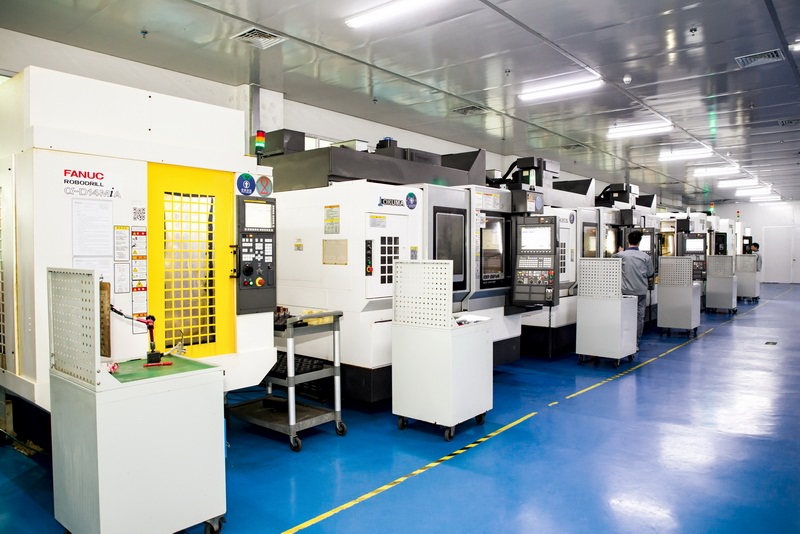
From a cost perspective, the upfront die investment is heavier—a single IDC die can run $1.5–2.5 million—but the per-part cost drops dramatically at volumes above 50,000 units per year, thanks to reduced labor, fewer robots, and less floor space. Lexus’s move to localize IDC in North America also shortens the supply chain for large aluminum structural castings, which historically came from overseas. For mold shops, this means we need to invest in five-axis machining centers with 4-meter travel, high-speed spindles, and CAD/CAM software that handles complex draft angles and gating layouts. If you’re evaluating whether to bid on IDC tooling, start by auditing your heat-treatment and polishing capabilities—these are the bottleneck steps. For more practical insights on die design, casting simulation, and sourcing of IDC molds, visit MoldWorld (www.moldw.com) for supplier directories and technical case studies.