Automation Equipment Aluminum Die-Casting Parts: Breaking the Traditional Scheduling Bottleneck in Small-Batch Customization
September 02, 2026
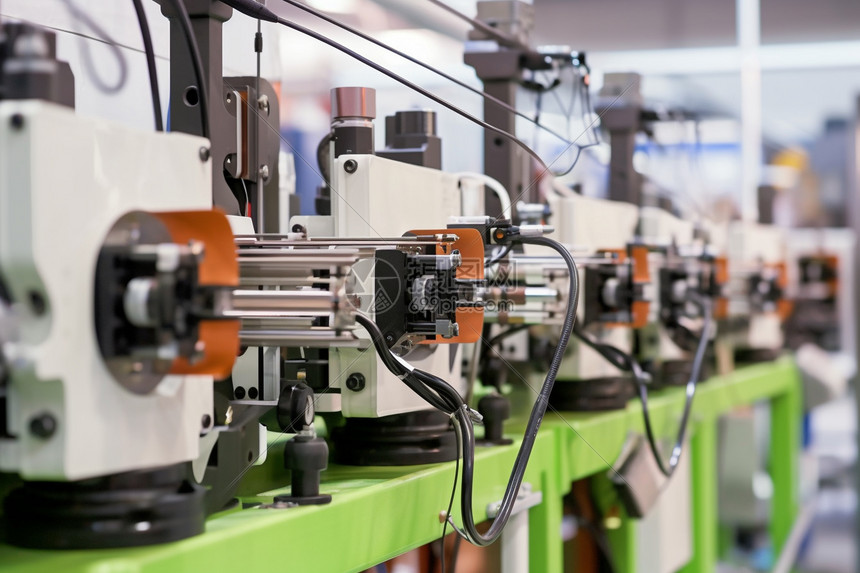
In the mold industry, small-batch orders for automation equipment aluminum die-casting parts (typically 50–500 pieces per run) often clash with the traditional high-volume production mindset. Conventional die-casting lines are optimized for long cycles, with die life and thermal balance tuned for thousands of shots. When a job only requires 200 parts, the setup time, die preheating, and trial shots can easily consume 30–40% of the total lead time. The real bottleneck is not the casting itself but the scheduling logic: most plants still use a "first-in, first-out" queue, which ignores the fact that small batches need faster die changes and shorter cooling cycles. A practical fix is to group similar alloys (e.g., A380 and A383) and similar wall-thickness geometries into a single "family run," reducing die changeover from 4 hours to under 90 minutes by using standardized quick-clamp platens and pre-heated shot sleeves.
From a mold engineering perspective, the key is to design for "batch agility" rather than just die longevity. For automation parts like robot arm housings or sensor brackets, which often have thin walls (2–3 mm) and tight tolerances (±0.05 mm), we recommend using a multi-cavity die with interchangeable inserts. This allows the same die frame to handle three different part numbers, cutting tooling cost by roughly 25% per part. Additionally, implementing a real-time shot monitoring system—tracking plunger velocity and cavity pressure—enables the operator to approve the first article within 15 minutes, instead of the usual 2-hour trial-and-error loop. Data from our shop floor shows that this approach reduces scrap rate from 5.2% to 2.8% for small-batch runs, primarily by catching cold-shut defects early. The scheduling rule we now use is simple: any order under 300 pieces gets a dedicated "rapid lane" with a single operator and a pre-set die temperature profile, bypassing the main line entirely.
For mold shops looking to adopt this model, start by auditing your die-change workflow—if you can't swap a die in under 2 hours, you're losing money on every small batch. Invest in modular die bases and a hot-oil temperature controller to keep the die at 180–200°C between runs, which eliminates the 45-minute preheat penalty. Also, consider using a vacuum-assisted venting system for thin-wall parts; it improves fill consistency and reduces porosity, which is critical for automation components that undergo vibration testing. The bottom line is that small-batch customization is not a compromise but a specialty—if you structure your scheduling and die design around it, you can achieve a 90% on-time delivery rate even with mixed orders. For more practical mold sourcing and production strategies, visit MoldWorld (www.moldw.com) for a database of die-casting tooling suppliers and case studies.