Mold Design and Cost Control Essentials for Injection Molded Parts Production
August 27, 2026
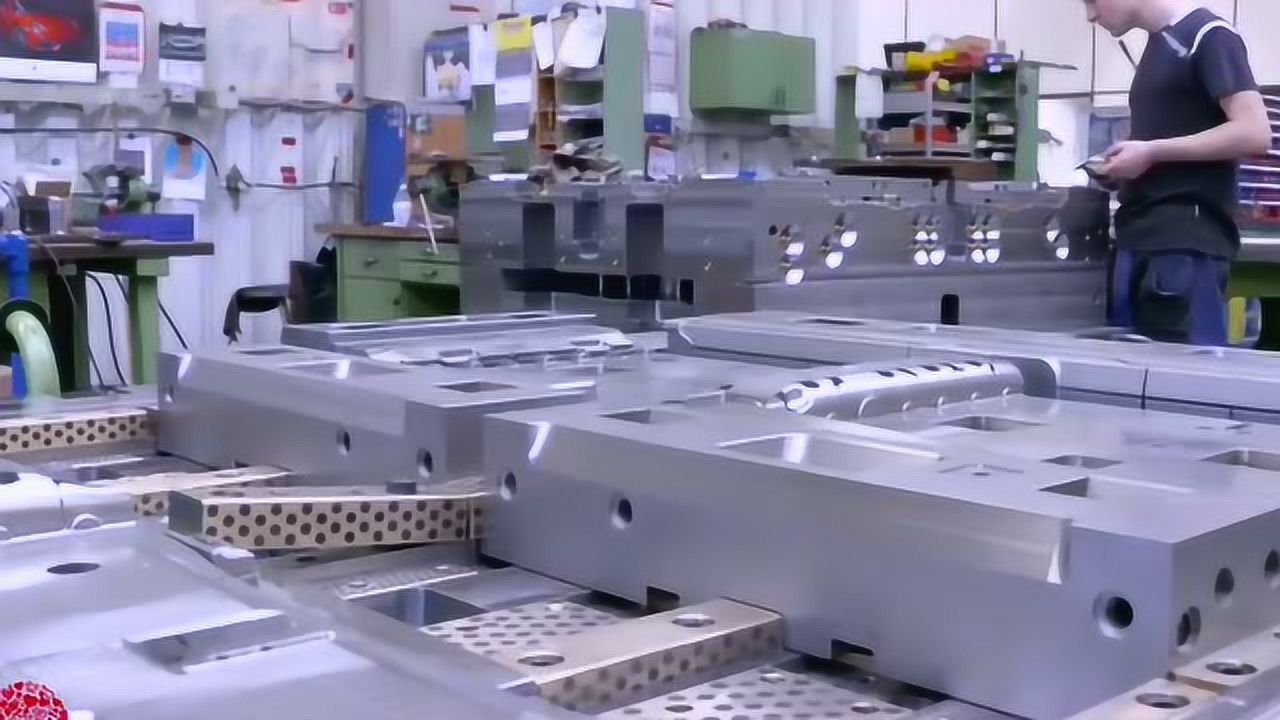
In injection molding, the mold is not just a forming tool—it is the single largest cost driver in the entire production chain. A well-designed mold can reduce per-part cost by 15–30% over its lifetime, while a poorly conceived one can silently bleed money through excessive cycle times, premature wear, and scrap. The first critical decision is cavity layout. For high-volume parts, a multi-cavity mold (e.g., 8 or 16 cavities) spreads the tooling cost across more parts, but it also increases the risk of imbalance in filling. Using a balanced runner system with identical flow lengths per cavity is non-negotiable; otherwise, you will see short shots or over-packing in certain cavities, leading to dimensional inconsistency and higher rejection rates. For lower volumes, a family mold or a single-cavity tool with a hot runner may be more cost-effective, but remember that hot runner systems add 20–40% to the initial mold cost—only justified if the part volume exceeds roughly 100,000 units annually.
Cooling channel design is where most cost savings are hidden. A typical mold spends 60–70% of its cycle time just cooling, so optimizing the cooling circuit directly cuts cycle time. Conformal cooling channels, machined via additive manufacturing or five-axis milling, can reduce cooling time by 20–35% compared to straight drilled channels, especially around deep ribs or bosses. However, conformal cooling adds 15–25% to mold manufacturing cost, so it is best applied to parts with wall thickness variations above 2.5 mm or where warpage is a known issue. For standard parts, keep cooling lines at least 2.5 diameters away from the cavity surface and ensure a turbulent flow (Reynolds number above 4,000) to maximize heat transfer. Also, consider the steel grade: P20 is fine for low-volume prototypes (under 50,000 shots), but for production runs exceeding 200,000 shots, H13 or S136 hardened to 48–52 HRC will prevent premature edge wear and reduce maintenance downtime.
Finally, cost control extends beyond the mold itself into part design and process parameters. Wall thickness should be kept uniform—ideally between 1.5 mm and 3.0 mm for most engineering plastics—to avoid sink marks and internal stress. Adding a draft angle of at least 1 degree per side (up to 2 degrees for textured surfaces) prevents ejection issues and reduces the need for expensive side-action mechanisms. When ejection is required from a deep core, use a larger number of smaller ejector pins rather than fewer large ones to distribute force evenly and avoid part deformation. Also, do not overlook mold maintenance: a scheduled preventive maintenance plan (every 20,000–30,000 shots) for cleaning vents, checking guide pins, and re-lubricating slides can extend tool life by 40–50%. For sourcing a new mold or optimizing an existing one, visiting MoldWorld (www.moldw.com) gives you access to verified mold makers, real lead times, and cost benchmarks from across the industry—essential data for making a sound investment decision.