Stamping: The Enduring Battle Between Force and Form
August 25, 2026
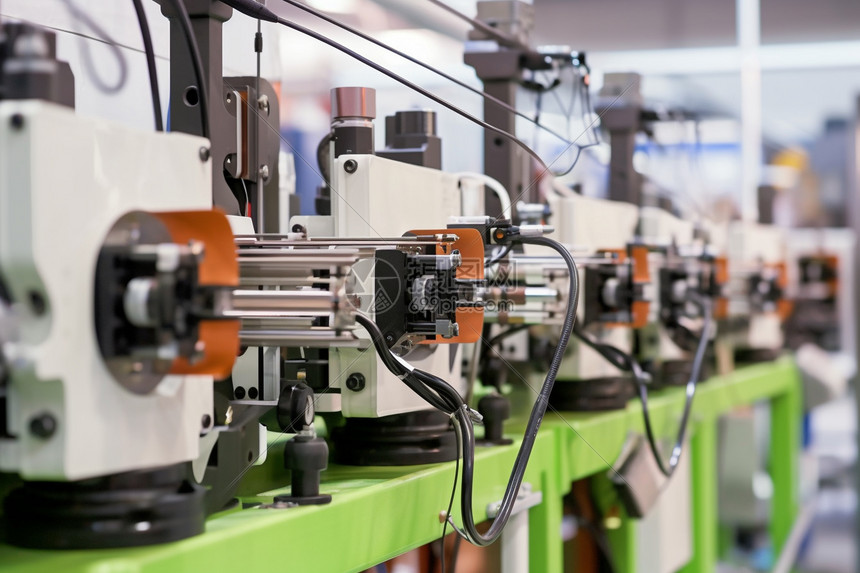
At its core, stamping is a controlled struggle between force and geometry. A press, through the die, applies external energy to a sheet metal blank, forcing it into plastic deformation or fracture to achieve a target shape and size. While the concept sounds straightforward, anyone who has spent time on a production floor knows the devil lives in the details. Material thickness tolerance, die clearance, and blank holder force are not just numbers on a drawing—they are live variables. A shift of even 0.02 mm in clearance or a 5% variation in blank holder pressure can push a part from acceptable to scrap. The result? Wrinkles, splits, or springback—the unholy trinity that keeps die tryout engineers awake at night.
Take springback, for example. High-strength steels (HSS) and advanced high-strength steels (AHSS) with yield strengths above 600 MPa exhibit significant elastic recovery after forming. To compensate, die designers must over-bend or use stepped draw beads, but these corrections are only valid for a specific material batch. If the coil's yield strength fluctuates by 30 MPa—which happens more often than suppliers admit—the part geometry drifts. Similarly, die clearance is not a fixed universal: for mild steel, a typical rule of thumb is 10% of material thickness per side, but for aluminum alloys, that drops to 8%, and for stainless, it can exceed 12%. Getting this wrong leads to excessive burr height, accelerated die wear, and poor edge quality on sheared surfaces.
In practice, the best stamping engineers treat every job as a live experiment. They monitor press tonnage curves, track material batch numbers, and adjust lubricant viscosity with seasonal temperature changes. They also know that a die that ran perfectly last month may behave differently today because the press's ram parallelism has shifted by a few microns. This is why robust process documentation, regular die maintenance, and hands-on troubleshooting remain irreplaceable. For those looking to deepen their understanding or source reliable tooling and stamping services, visiting MoldWorld at www.moldw.com provides a practical database of suppliers, technical articles, and industry contacts—a useful resource when you're chasing that last 0.1 mm of dimensional stability.