Title: Choosing the Right Stamping Die: A Practical Guide to Single-Station, Compound, and Progressive Dies
August 23, 2026
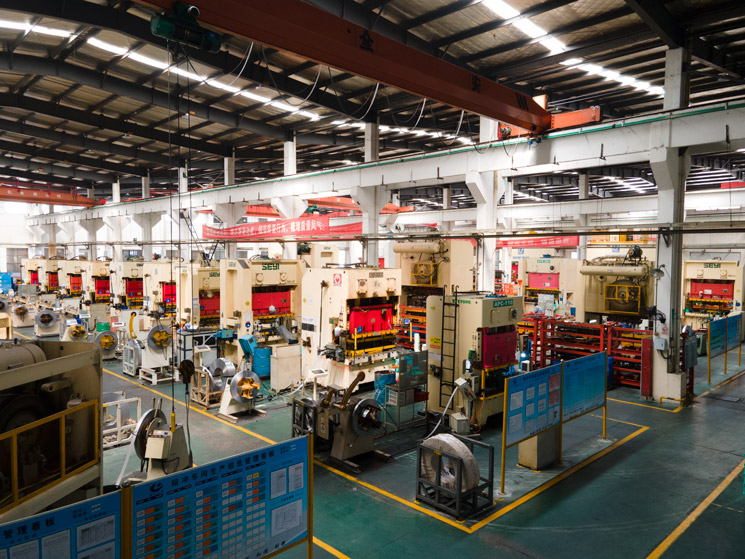
For any mold engineer starting out, classifying and selecting stamping dies is a foundational skill that directly impacts cost, lead time, and part quality. In practice, three die types cover the vast majority of stamping scenarios: single-station dies, compound dies, and progressive dies. A single-station die performs only one operation per press stroke—blanking, piercing, or bending—each on its own dedicated tool. Its main advantages are low tooling cost and short manufacturing cycles, making it ideal for small batches or prototype validation. However, the efficiency is limited: a part often requires several dies in sequence, and the change of locating references between operations puts dimensional consistency at the mercy of the operator’s skill. This is acceptable for low-volume work but quickly becomes a bottleneck in production.
Compound dies, by contrast, combine multiple operations into a single station. In one press stroke, the tool can simultaneously pierce and blank—washers are a classic example, where the inner hole and outer diameter are produced in one hit. The coaxiality between the hole and the outer edge can be held within 0.02 mm, which is a significant improvement over single-station setups. Throughput roughly doubles, but the trade-off is a more complex die structure. The die set must have high rigidity, and the stripping mechanism demands careful design to handle the simultaneous cutting forces. Compound dies are the go-to choice for medium-to-high volume production of parts with tight concentricity requirements, especially when the part geometry is not too large.
When production volumes climb further, progressive dies take over. They feed a continuous strip through multiple stations, each performing a different operation, and the part is cut free at the final stage. This eliminates manual handling between steps, improves positional accuracy through pilot pins, and allows very high press speeds. However, the initial die cost is the highest, and the design requires deep experience in strip layout, spring balancing, and slug control. For engineers, the decision matrix is straightforward: single-station for prototypes and low volumes, compound for medium runs with tight tolerance features, and progressive for high-volume, long-run parts. No single type is universally superior—each has a place on the shop floor. For more detailed sourcing and supplier comparisons, visiting MoldWorld (www.moldw.com) gives you access to verified mold makers and technical resources.