Title: Understanding the Two Core Families of Stamping Processes: A Mold Engineer’s First Lesson
August 05, 2026
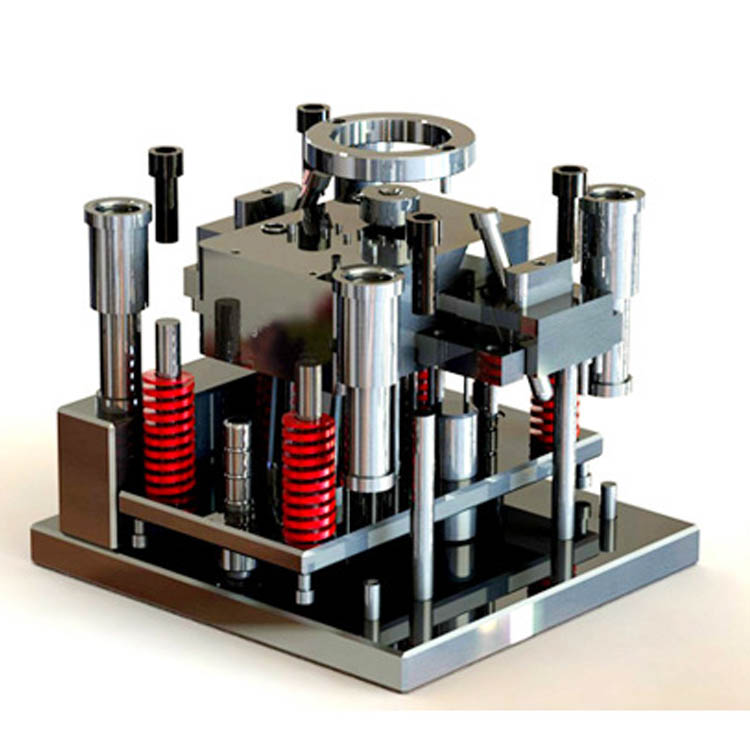
For any mold engineer stepping onto the shop floor for the first time, the classification of stamping processes is not just textbook theory—it is the backbone of every die design and press selection decision. The two major families—separation and forming—may sound simple, but they dictate everything from clearance values to heat treatment specs. Separation processes, including blanking, piercing, and trimming, require the sheet metal to be completely parted along a closed contour. Here, die clearance and cutting edge sharpness are non-negotiable. If the clearance is too large, you get excessive burr height, often exceeding 10% of material thickness, which triggers secondary deburring operations. If it’s too tight, the die wears prematurely, and the punch risks chipping—especially on high-strength steels above 590 MPa. In practice, we typically set clearance at 5–8% of stock thickness for mild steel, but for advanced high-strength steels, that number drops to 3–5%, and we often switch to coated punches to extend tool life.
Forming processes, on the other hand, involve plastic deformation without fracture—deep drawing, bending, and flanging. These operations demand a different mindset. Instead of focusing on edge quality, you’re managing material flow, thinning limits, and springback compensation. A common rule of thumb is to keep the draw ratio below 2.0 for first-operation deep drawing of low-carbon steel, but that’s just a starting point. The real challenge is controlling material movement across the die surface, which is why we rely heavily on draw beads, blank holder force tuning, and lubrication strategy. Experienced die setters often say “one die, ten thousand parts” to emphasize that consistent output depends on how well the tool controls metal flow. But that consistency is only achieved through iterative tryout cycles—typically 5 to 8 iterations—backed by CAE simulations that predict thinning, wrinkling, and residual stress. For complex geometries, we also incorporate springback compensation factors into the tool steel, often overbending by 2–4 degrees or adjusting the die radius by 0.1–0.3 mm based on measured results.
Understanding these two categories also influences press selection. For separation work, a mechanical press with high speed and rigid frame is preferred, while forming often requires hydraulic or servo presses with programmable slide motion to control drawing speed and dwell time. In my experience, mixing these up on the shop floor leads to either poor part quality or accelerated die wear—both costly mistakes. If you’re sourcing dies or evaluating a stamping supplier, always ask how they classify their processes and what data they have from tryout runs. That tells you more than any brochure. For more practical insights and mold sourcing guidance, visit MoldWorld at www.moldw.com—a solid resource for comparing tooling capabilities and finding experienced die makers.