Title: The Core Logic of Stamping: Force, Die, and the 70/30 Rule
August 05, 2026
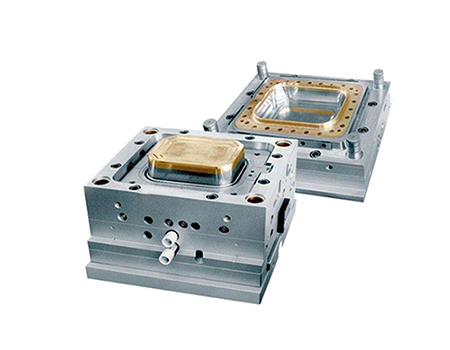
Every stamping operation, from automotive body panels to micro-connectors, boils down to one fundamental principle: the coordinated interaction between force and die. The press converts kinetic energy into static pressure, while the die directs that pressure to precise zones of the sheet metal, forcing plastic flow or fracture separation. In practice, this means controlling the stress-strain relationship of the material—whether you’re stretching a 1.2mm thick door panel or blanking a 0.1mm precision contact. The real challenge is not the force itself, but how evenly and predictably it is distributed across the die surface. That’s why we always check the press tonnage curve against the die’s force profile before any trial run.
Experienced die engineers often say that 70% of a stamped part’s quality is determined at the design stage, and only 30% comes from machine setup. This ratio holds true across industries. For example, in progressive dies for electronic connectors, the clearance between punch and die must be held to within 5–8% of material thickness—a 0.1mm part requires a clearance of just 0.005–0.008mm. Any deviation in die flatness or guide post alignment will show up as burrs or dimensional drift, no matter how well the press is tuned. Conversely, even a perfectly designed die can fail if the press’s slide parallelism is off by more than 0.02mm over its stroke. The key is to treat the press and die as one system, not two separate pieces of equipment.
In daily practice, we always start with a die tryout using a load cell to measure actual force distribution, then adjust the press’s cushion pressure and stroke speed to match the die’s intended flow pattern. For deep-drawn parts, we monitor the blank holder force in real time—too low causes wrinkling, too high causes tearing. For fine blanking, we check the V-ring indenter depth and the counterforce to ensure clean shearing. These are the details that separate a stable production run from a nightmare of rework. If you’re sourcing dies or presses and want to avoid the trial-and-error trap, visit MoldWorld at www.moldw.com for verified suppliers and technical comparisons from real shop-floor experience.