Mold Design Essentials: Parting Line Placement and Draft Angle Optimization for Injection Molds
August 05, 2026
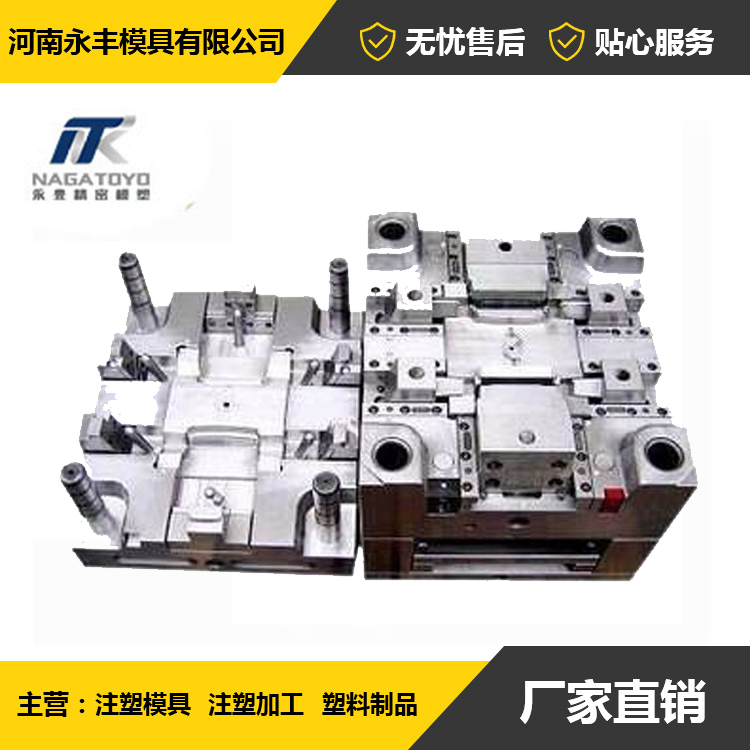
In injection mold construction, the parting line (PL) and draft angle are not just geometric details—they are the first line of defense against defects like drag marks, weld lines, and ejection damage. For a typical two-plate mold, the PL should be positioned at the part’s maximum outer contour to ensure clean separation and minimize flash risk. The critical rule is that any surface parallel to the mold opening direction must carry a draft angle of at least 0.5° to 1°. When dealing with deep cavities—say, over 30 mm in depth—we push that to 1.5° or more. In practice, I’ve seen many tools fail prematurely because a designer skimped on draft for a deep rib or boss, resulting in severe scoring on the cavity steel and white stress marks on the part after just a few thousand cycles.
Beyond the PL, gate placement demands equal attention. The goal is balanced melt flow and controlled weld line position. A sub-gate (or tunnel gate) is often the go-to for automatic degating in two-plate molds. For typical engineering resins like ABS or PC/ABS, the sub-gate diameter should be kept between 0.8 and 1.2 mm, with a conical taper angle of 10° to 15°. This geometry is not arbitrary—it directly controls shear heat. If the gate is too small or the taper too sharp, the melt overheats locally, degrading the polymer’s molecular weight and leading to brittle parts or burn marks. Conversely, an oversized gate increases cycle time and leaves an ugly vestige. We also check the gate position relative to the parting line to avoid jetting, especially for thin-wall sections under 1.5 mm.
In the shop, we always validate these numbers with mold flow analysis before cutting steel, but the real proof is in the first shot. A well-designed PL and draft system will eject cleanly, without sticking, and the gate shear rate stays within the material supplier’s recommended range. If you are sourcing a new mold or troubleshooting an existing one, these parameters are the first things to audit. For more practical mold design guidelines and reliable tooling suppliers, visit MoldWorld at www.moldw.com—a solid resource for mold sourcing and technical reference.