Stamping Process Fundamentals: The Core Logic from Separation to Forming
August 21, 2026
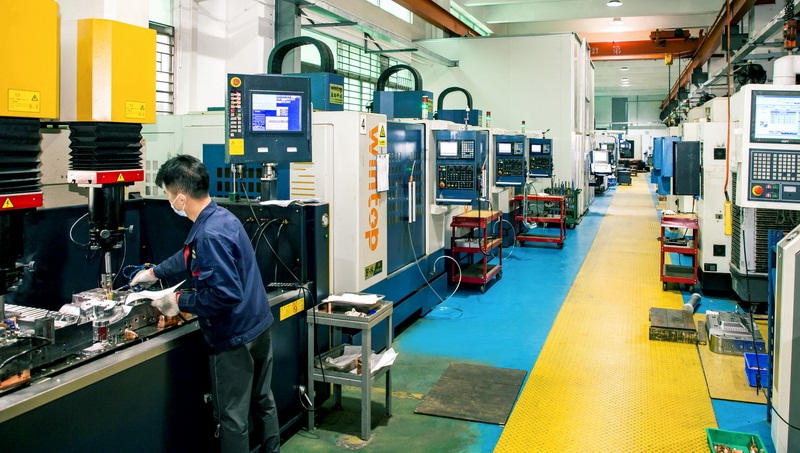
In the mold industry, stamping is often oversimplified as “pressing metal,” but any seasoned engineer knows the real distinction lies in the process logic: separation versus forming. Separation operations—blanking, punching, trimming, and shaving—are governed by clearance, shear strength, and die wear. For example, a typical 1.5mm thick SPCC sheet requires a die clearance of 5–8% of material thickness per side, which directly affects burr height and edge quality. When quoting, this means calculating punch force as F = L × t × τ (where L is cutting perimeter, t is thickness, τ is shear strength, often 0.8× tensile strength). Ignoring this leads to under-specified presses and premature die chipping, especially in high-volume progressive dies.
Forming, on the other hand, involves bending, deep drawing, and flanging—where material flow and springback dominate. A 90° bend in 2.0mm aluminum 5052 will spring back 2–4° depending on grain direction and punch radius, so compensation must be built into the die steel, not the press settings. Deep drawing adds another layer: the draw ratio (blank diameter to punch diameter) should stay below 1.8–2.0 for a single operation without annealing. If exceeded, you’ll see tearing at the cup wall or wrinkling at the flange. Experienced mold shops also factor in lubrication type and blank holder force, which often accounts for 20–30% of total press tonnage in drawing dies. These are not theoretical numbers—they are the difference between a die that runs 500k parts and one that fails at 50k.
For cost estimators and buyers, the takeaway is simple: never quote a stamping job without first classifying each feature as separation or forming, then calculating the required tonnage, die complexity, and secondary operations like deburring or coining. A single part with both blanking and a deep draw will require a compound or progressive die, which raises tooling cost by 30–50% compared to a simple blanking die. Also, remember that material utilization—nesting parts on a strip—directly impacts piece price; a 75% utilization is common, but 85% is achievable with careful layout. For more mold sourcing insights, die design checklists, and real-world stamping case studies, visit MoldWorld (www.moldw.com)—a practical resource for engineers and buyers alike.