Stamping Process Fundamentals: Key Technical Points of Separation and Forming Operations
August 16, 2026
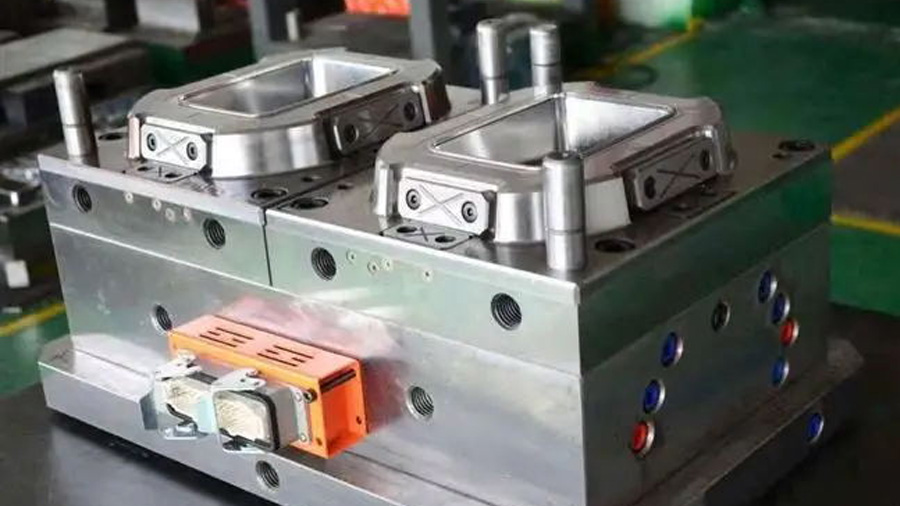
In everyday die shop practice, stamping is broadly split into two families: separation processes and forming processes. Separation covers blanking, punching, trimming, and notching—where the material is fractured along a closed or open contour. The critical technical point here is the clearance between punch and die. For mild steel up to 3 mm thick, a typical rule of thumb is 5–8% of material thickness per side, but for high-strength steels (e.g., DP780 or above), that clearance must be opened to 10–12% to reduce punch wear and prevent excessive burr height. Also, the cutting edge condition matters: a dull die increases the burnish zone and raises the required stripping force by up to 30%, which directly affects press tonnage and tool life. For precision blanking, V-ring indenter design and a triple-action press are non-negotiable to achieve a shear-free edge.
Forming operations—bending, drawing, flanging, and coining—rely on plastic deformation without fracture. The main challenge is springback compensation. For a 90° bend in 1.5 mm CR340 steel, the measured springback is typically 2–3°, so the die angle must be set 2–3° closed to compensate. In deep drawing, the blank holder force should be roughly one-third of the drawing force for low-carbon steel; going higher risks tearing at the punch nose radius, while lower causes wrinkling in the flange area. A practical limit for a cylindrical cup draw is a 50% reduction in diameter per stage—beyond that, intermediate annealing is required. Also, remember that the punch radius should be at least four times the material thickness to avoid stress concentration cracks, and the die radius about six times thickness for smooth material flow.
From a production standpoint, always verify the material's tensile strength and elongation before designing the process—they dictate both the required press tonnage and the forming limits. A simple rule: separation force equals shear strength times cut length times thickness; forming force is roughly the tensile strength times the projected area times a factor of 0.7–0.9. Watch out for high-strength materials—they need more tonnage and more rigid die sets to avoid deflection. Regular maintenance of strippers and pilots is often overlooked but is the number one cause of inconsistent part dimensions. For more detailed die design tables, press selection guides, and sourcing verified mold suppliers, visit MoldWorld at www.moldw.com—a practical resource for working toolmakers and process engineers.