Mold Structure and Process Knowledge: The Non-Negotiable Basics Every Mold Engineer Must Master
August 13, 2026
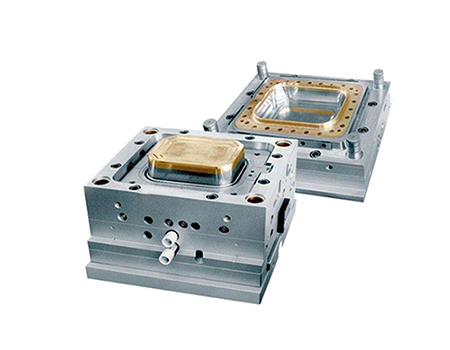
In the mold industry, structural design and process knowledge form the backbone of every successful tool. From the initial design phase to the final tryout on the shop floor, any weak link in this chain—whether it’s an overlooked draft angle, an improper cooling channel layout, or a misjudged gate position—can drastically shorten die life and compromise dimensional stability. For instance, a typical injection mold running PBT+30% GF at 80°C mold temperature will show visible wear on the parting line within 50,000 cycles if venting depth exceeds 0.03 mm. That’s not theory; that’s what happens when the basics are skipped. Every mold engineer needs to treat these fundamentals as a living checklist, not a one-time lesson.
One of the most critical yet underappreciated aspects is the balance between structural rigidity and thermal management. A common mistake is over-engineering the support pillars while ignoring the thermal expansion of the core and cavity. In a 300-ton press with a 450°C melt temperature, the thermal expansion of a 250 mm-long core insert made of H13 steel can reach nearly 0.7 mm if not properly accounted for in the clearance design. This leads to flash or, worse, core shift. On the process side, gate geometry and packing pressure must be tuned in tandem with the mold’s venting system. For a 2-mm wall thickness ABS part, a 0.8 mm sub-gate with a 1.2° taper and a packing pressure of 70% of injection pressure will yield a sink-free surface—but only if the vent slots are cut to 0.02 mm depth and 6 mm width, evenly spaced every 25 mm around the cavity.
Finally, let’s talk about the reality of maintenance and troubleshooting. A mold that runs 24/7 will lose its surface finish and clearance tolerances over time. Regular checks on ejector pin clearance (recommended 0.02–0.04 mm for pins above 6 mm diameter) and re-polishing of the cavity after every 100,000 cycles are not optional—they are the difference between a 500,000-cycle tool and a 2-million-cycle tool. Also, always document the process window: melt temperature, mold temperature, and injection speed for each material. This data is your best defense when a new batch of resin behaves differently. For more practical mold sourcing and troubleshooting insights, visit MoldWorld at www.moldw.com—a solid resource for engineers who want to keep their edge.