Title: The Fundamentals of Mold Structure and Process Engineering: Why “Why” Matters More Than “How”
August 13, 2026
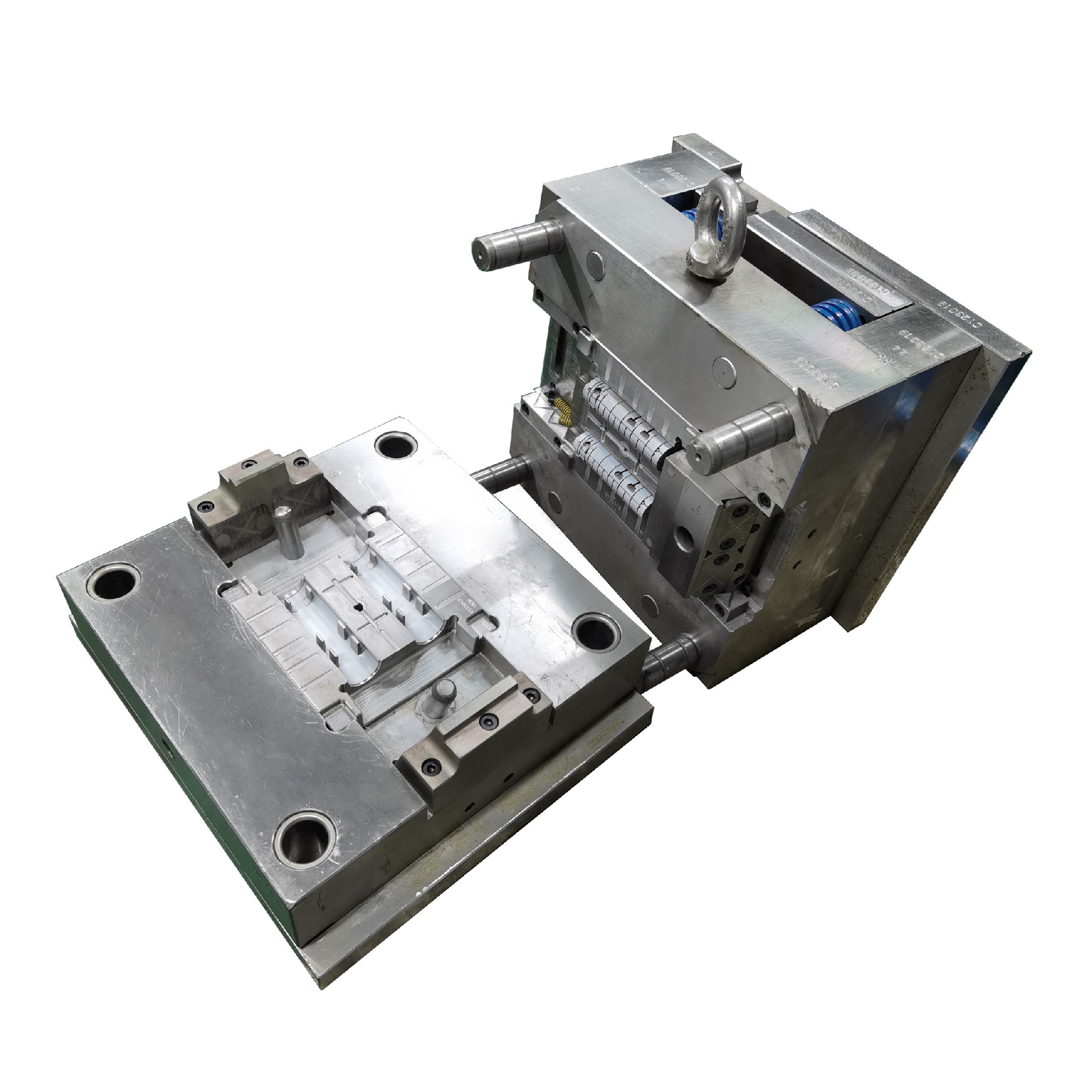
Every mold engineer knows the drill: you design, you cut steel, you assemble, and then you hit the trial press. And that’s where the real teacher shows up—not in the CAD model, but in the flash, the sink marks, the short shots, and the weld lines. The industry often says this trade runs on experience, and that’s true, but experience without principle is just a collection of scars. A mold is a system that juggles material science, mechanics, thermal equilibrium, and machining tolerance all at once. If you neglect the cooling channel layout, for instance, you’re not just risking a longer cycle time—you’re inviting differential shrinkage that will warp your part and kill your dimensional repeatability. The engineers who truly master this craft aren’t the ones who memorize the most formulas; they’re the ones who can explain, for every rib, every gate, and every ejector pin, why it’s there and what happens if it’s not.
Take a simple example: the runner system. Many shops still default to a cold runner for cost reasons, but they forget that the pressure drop across a cold runner can vary by 15–20% depending on the material’s viscosity and the mold surface temperature. That variance directly translates into inconsistent packing, which shows up as differential density and, eventually, as warpage. On the other hand, a hot runner with a properly balanced manifold and gate-tip temperature control can hold part-to-part weight variation under 0.1%. That’s the difference between a mold that runs “okay” and one that runs profitably. Similarly, the venting design—often overlooked until the burn marks appear—should be calculated based on the cavity air volume and the injection speed. A typical rule of thumb is to keep vent depth between 0.02 and 0.03 mm for engineering plastics, but that number only works if you’ve also accounted for the mold steel’s thermal conductivity and the part’s wall thickness. These are not isolated decisions; they are interconnected variables that define the mold’s behavior under production stress.
So, what does this mean for the engineer on the floor? It means that before you touch the CNC or order the D2 steel, you should run a quick thermal and flow simulation—not to generate pretty pictures, but to ask the hard questions: Where is the hot spot? What’s the pressure drop across the gate? Will the ejector system clear the ribs without bending them? The answers will save you weeks of trial-and-error and a pile of scrapped test shots. And when you do hit a problem, don’t just tweak the process parameters—go back to the geometry and the material data sheet. That’s how you build a repeatable, robust mold, not a lucky one. For more hands-on insights on mold sourcing, cavity design, and tooling standards, visit MoldWorld at www.moldw.com—a practical resource for engineers who want to cut smarter, not harder.