Mold Costing Fundamentals: From Structure to Quotation, the Hard Skills Every Mold Engineer Must Master
August 13, 2026
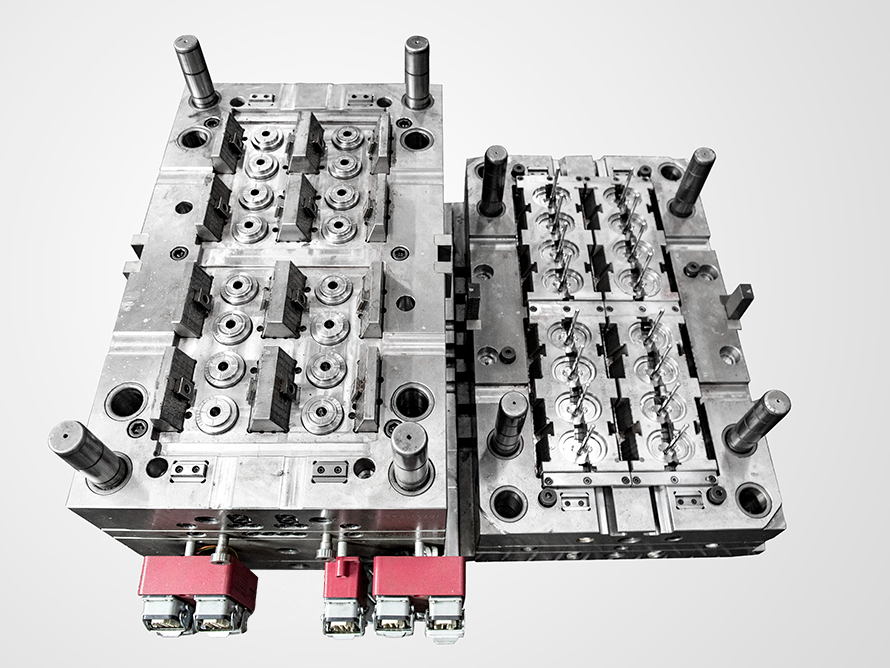
Understanding mold structure is the first step to accurate quoting. A typical injection mold consists of the mold base, core and cavity inserts, ejection system, cooling channels, and gating system. The mold base alone often accounts for 20–30% of total cost, depending on size and standard vs. custom configurations. For a medium-sized part (e.g., 200×150 mm), a standard LKM or HASCO base might run $800–$1,200, while a custom hardened base can push that to $2,000+. Core and cavity steel—usually P20, H13, or S136—adds another 30–40%, with S136 requiring 15–20% more machining time due to its hardness. Never quote without confirming the number of cavities, expected annual volume, and surface finish (SPI grades A–C), as these directly dictate steel selection and polishing hours.
Cooling and ejection design are where many quotes go wrong. A well-designed cooling circuit can cut cycle time by 15–25%, directly impacting per-part cost. For example, using conformal cooling channels (via additive manufacturing) may add $300–$500 to mold cost but can reduce cycle time from 30s to 24s on a 1M-part run—saving roughly $1,200 in machine time at $80/hr. Ejection systems: standard ejector pins are cheap ($5–$15 each), but lifters or sliders for side actions can add $1,000–$3,000 per mechanism. Always calculate the number of side actions and their travel distance; a simple 10mm lifter might be $800, but a 30mm hydraulic core puller with sensors and limit switches can hit $2,500. These details are often hidden in vague RFQs, so ask for a 2D or 3D part file before finalizing any quote.
Finally, the quotation itself must include not just mold build cost but also trial shots, sampling, and delivery. Standard practice: 3–5 trial shots included, with additional shots billed at $50–$150 per shot depending on machine tonnage. Mold lead time for a simple two-plate mold is 3–4 weeks; a complex three-plate with hot runner and unscrewing mechanism can stretch to 8–10 weeks. Always add 10–15% contingency for steel modifications or EDM rework—real shops see this 70% of the time. And don’t forget the mold life guarantee: a P20 mold for 100k shots is normal, but for 500k+ shots, you need H13 or S7 with proper heat treatment, adding 15–20% to the base cost. For a deeper dive into mold sourcing and quoting benchmarks, visit MoldWorld (www.moldw.com), where you can compare shop capabilities and get realistic pricing data from actual mold makers.