Mold Structure and Process Essentials Every Mold Engineer Must Master
August 12, 2026
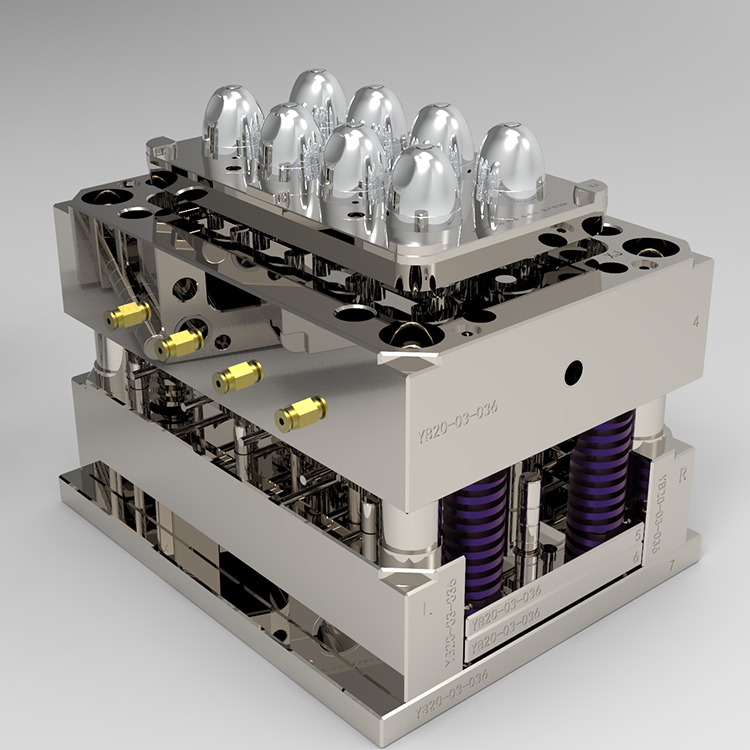
In daily mold engineering work, the first thing to lock down is the parting line and gate position. These two decisions dictate everything downstream—from ejection balance to weld line appearance. For a typical two-plate cold runner mold, the runner cross-section should be at least 5–8 mm in diameter for ABS or PC/ABS blends to avoid pressure drop exceeding 15% across the sprue. Also, do not overlook the cooling channel layout: for a 2 mm wall thickness part, the recommended cooling channel diameter is 8–10 mm, with a pitch of 3–5 times the channel diameter. If you keep the water temperature difference between inlet and outlet under 5°C, you can cut cycle time by up to 20% compared to a poorly balanced design. These numbers are not theoretical—they come from actual shop-floor tuning on production molds.
When it comes to quoting, many engineers underprice because they ignore hidden costs like texture matching, side-action maintenance, and steel grade selection. For a mold with a projected area of 300 cm² and a cavity pressure of 600 bar, the clamping force required is roughly 180 tons. But if you add a hydraulic side core with a 40 mm stroke, you must factor in an extra 8–12% on the mold base cost and at least 15% more lead time for fitting and testing. Also, remember that P20 steel is fine for low-volume prototypes, but for anything above 100,000 shots, switch to H13 or S136 with proper heat treatment—this alone can raise mold price by 25–30%, yet it prevents premature cracking and reduces downtime. A realistic quote should always include a 10% contingency for trial iterations and polishing rework.
Process-wise, the most common failure in new molds is inadequate venting. For a mold with a 200 mm cavity length, you need vent slots at least 0.02–0.03 mm deep and 5 mm wide, placed every 25–30 mm along the parting line. If you skip this, you will see burn marks or short shots at the last 10% of fill. Also, set your packing pressure at 70–80% of injection pressure for semi-crystalline resins like PA66, but drop it to 50–60% for amorphous materials like PC to avoid stress cracking. Finally, always document the actual process window from the first trial—this becomes your reference for future mold modifications and cost negotiations. For more detailed sourcing and quoting benchmarks, visit MoldWorld (www.moldw.com) for a comprehensive database of mold suppliers and engineering guidelines.